
Aviation Infrastructure Securing the Skies from the Ground Up
Aviation infrastructure represents precision, safety, and uninterrupted connectivity. Airports, air traffic control towers, navigation systems, and terminal buildings operate in open, elevated, and lightning prone environments, handling enormous passenger movement and mission critical electronic systems every hour.
At LPES International, we deliver integrated lightning protection and surge protection solutions that act as a comprehensive electrical shield, protecting airport buildings, critical assets, manpower, operational databases, and IT systems through LPES Lightning Protection, Surge Protection Devices, Earthing, and Equipotential Bonding solutions Equipotential Bonding solutions

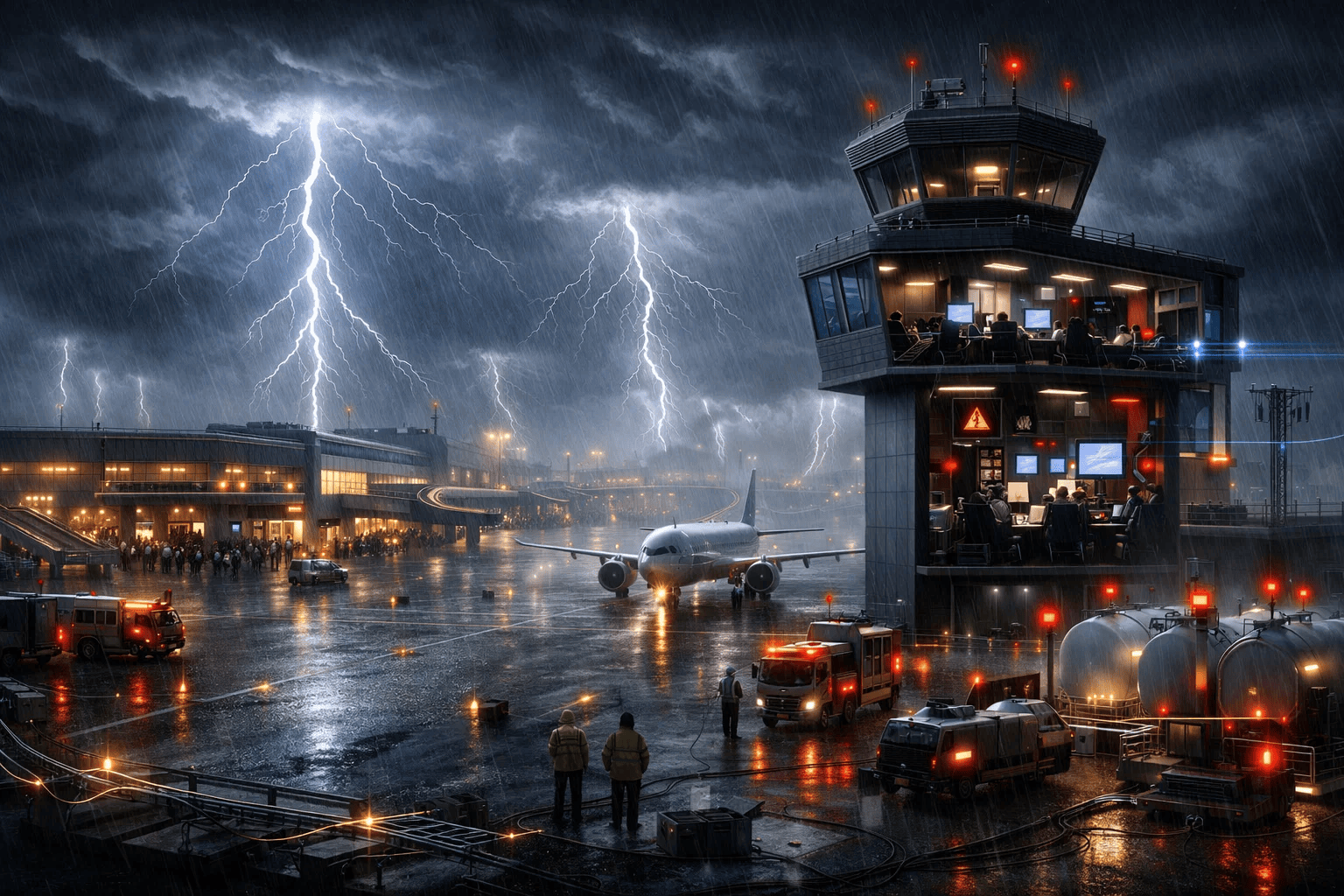
The Problem: Lightning Induced Downtime in Aviation Operations
Airports cannot pause. Yet during thunderstorms and lightning events, aviation facilities frequently face
- Failure of airfield ground lighting and navigation aids
- Disruption of Air Traffic Control (ATC) and AOCC operations
- Power tripping in terminals, control towers, and substations
- Breakdown of communication, CCTV, FIDS, and baggage systems
- Increased fire, explosion, and shock hazards in fuel handling zones
The Aviation Advantage And Its Electrical Vulnerability
The aviation sector thrives on:
- Highly advanced navigation and communication systems
- Centralized data driven operations and real time monitoring
- Continuous 24/7 airport activity with global connectivity
- Sophisticated IT infrastructure and automation
- Skilled manpower operating in safety critical environments
The LPES Shield: Integrated Protection for Aviation Infrastructure
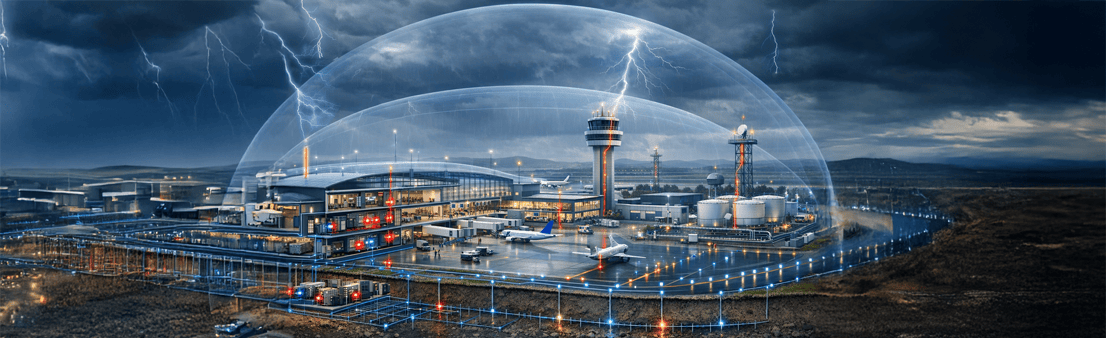
Lightning Protection Systems (LPS)
- Passenger terminals and cargo buildings
- Control towers and ATC facilities
- Hangars, MRO buildings, and fuel farms
- Radar towers, antennas, lighting masts, and rooftop installations
Surge Protection for Power, Navigation & IT Networks
- Power distribution systems, HT/LT panels,UPS, and DG sets
- Airfield Ground Lighting (AGL) and navigation aids
- ATC, AOCC, SCADA, and automation systems
- IT networks, communication lines, CCTV, and access control
Earthing Systems The Foundation of Aviation Safety
- Providing low resistance paths for lightning and fault currents
- Controlling ground potential rise across large airside areas
- Enhancing the performance of lightning and surge protection systems
Equipotential Bonding Protecting People & Operations
- Metallic structures, pipelines, cable trays, and equipment
- Fuel storage and dispensing systems
- Terminal infrastructure and service areas
What LPES Protects Across Railway Systems
- Buildings & Infrastructure: terminals, towers, hangars, fuel farms
- Critical Assets: navigation aids, ATC systems, AGL networks
- Power Systems: substations, panels, UPS, backup power
- Databases & IT Fields: flight data, airport operations systems
- Manpower & Passengers: operational staff, maintenance teams, travelers