Introduction
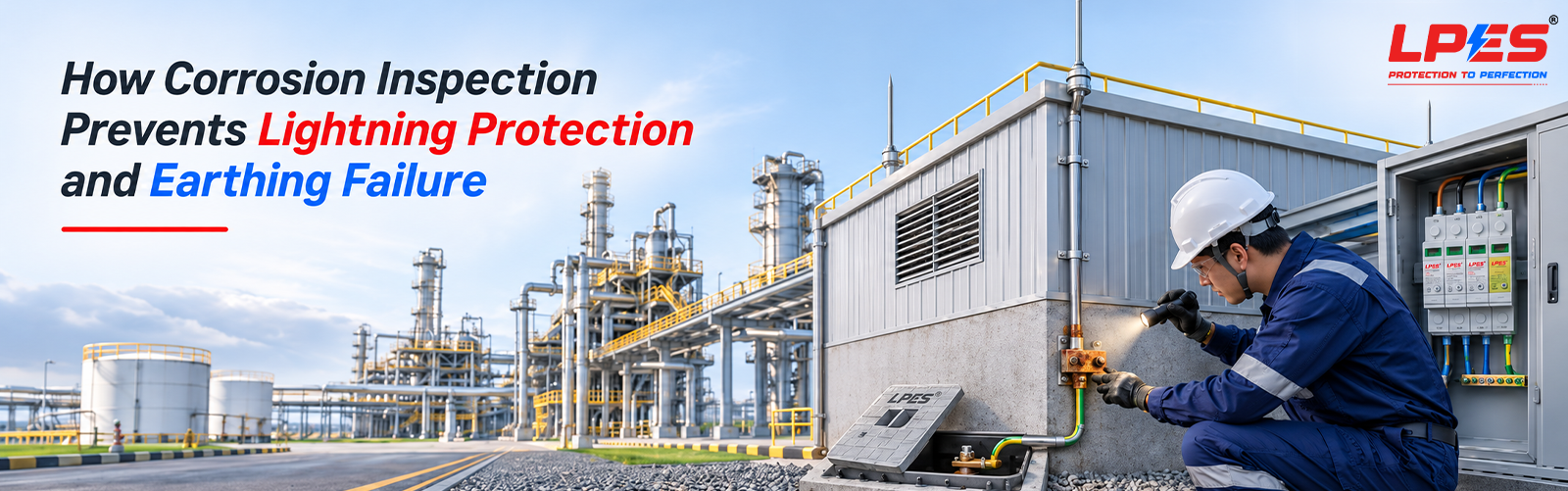
Lightning protection and earthing systems are designed to protect industrial facilities, electrical infrastructure and personnel from lightning currents, electrical faults and transient overvoltages. However, continuous exposure to moisture, industrial chemicals, atmospheric pollutants and contaminated soil can gradually affect the performance of their metallic components.
Chemical and industrial process plants are particularly vulnerable to corrosion because of their operating environments. Even a correctly designed protection system can deteriorate over time if its physical condition is not regularly assessed.
Corrosion inspection helps facility engineers identify deterioration before it develops into electrical discontinuity, equipment damage, safety hazards or operational interruptions.
1. Why Corrosion Is a Serious Concern in Industrial Facilities
Industrial facilities depend on interconnected electrical and mechanical infrastructure for safe and continuous operation.
Equipment requiring reliable earthing and lightning protection may include:
Chemical storage tanks and process vessels
Transformers and electrical distribution panels
Industrial motors and machinery
PLC and process control systems
Instrumentation and communication networks
Metallic pipelines and structural steelwork
Motor control centres
Corrosion can gradually reduce conductor thickness, weaken mechanical connections and increase electrical resistance at joints.
During a lightning strike or electrical fault, deteriorated connections may contribute to dangerous potential differences, localised heating or unintended current paths.
In facilities handling flammable materials, electrical sparking caused by compromised connections can also create an ignition hazard.
2. Common Causes of Corrosion in Protection Systems
Understanding the causes of corrosion helps engineers identify vulnerable areas and develop appropriate maintenance strategies.
Atmospheric Corrosion
Outdoor lightning protection components are continuously exposed to rainfall, humidity, temperature variations and industrial emissions.
Air terminals, down conductors, mounting brackets and connection clamps may deteriorate when their materials are unsuitable for the surrounding environment.
Soil Corrosion
Underground earthing systems are affected by soil characteristics such as:
Moisture content
Soil pH
Chloride concentration
Chemical contamination
Soil resistivity
Chemical leakage and contaminated drainage can create locally aggressive conditions around buried conductors and earth electrodes.
Galvanic Corrosion
Galvanic corrosion can occur when dissimilar metals are electrically connected in the presence of moisture or another conductive electrolyte.
For example, an unsuitable connection between copper and galvanized steel may accelerate deterioration of the less corrosion-resistant metal in that particular combination.
Compatible materials and suitable transition connectors can help reduce this risk.
Stray Current Corrosion
Unintended direct current flowing through underground metallic infrastructure can accelerate corrosion where current leaves the metal and enters the surrounding soil.
Facilities with cathodic protection systems or other DC installations may require additional investigation when unusual corrosion patterns are identified.
3. How Corrosion Affects Lightning Protection and Earthing Performance
A lightning protection system depends on electrically continuous and mechanically reliable paths from the air-termination system to the earth-termination system.
Corrosion can compromise these paths in several ways.
Component | Potential effect of corrosion |
Air terminals | Reduced mechanical strength |
Down conductors | Loss of effective cross-sectional area or continuity |
Connection clamps | Increased contact resistance |
Earth electrodes | Material loss and reduced earthing performance |
Bonding conductors | Loss of equipotential bonding |
Test joints | Unreliable connections and difficult testing |
SPD earthing connections | Increased residual voltage across protected equipment |
A particularly important concern is hidden deterioration. An earthing network may appear satisfactory during an external inspection while underground conductors or individual connections have already experienced significant material loss.
4. Key Areas to Check During Corrosion Inspection
Air Termination Systems and Down Conductors
Inspect exposed conductors, air terminals, supports and mounting arrangements for pitting, cracking, damaged coatings, loose connections and visible material loss.
Areas near chemical exhaust outlets and moisture accumulation points require particular attention.
Earth Electrodes and Inspection Chambers
Check accessible electrode connections, earth pits and inspection chambers for water accumulation, chemical contamination, damaged coatings and deteriorated joints.
Where measurements or inspection history indicate possible underground deterioration, selective excavation may be necessary to assess buried components.
Equipotential Bonding Connections
Inspect bonding connections associated with process vessels, structural steelwork, electrical equipment and metallic pipelines.
Corroded or disconnected bonding conductors can allow hazardous voltage differences to develop during lightning events or electrical faults.
Surge Protection Device Connections
Inspect SPD terminals, associated conductors and earthing connections according to the manufacturer's instructions.
Although an SPD may show a healthy status indication, deterioration in its external connections can affect the performance of the overall surge protection arrangement.
5. Practical Methods for Corrosion Inspection
Visual inspection alone may not provide sufficient information about the electrical and mechanical condition of protection systems.
A structured inspection programme should combine appropriate assessment methods.
Visual inspection: Identify corrosion deposits, pitting, coating damage, exposed base metals and deteriorated connections.
Continuity testing: Verify electrical continuity across down conductors, bonding connections and accessible earthing conductors.
Earth resistance testing: Evaluate earthing performance using a suitable measurement method and compare results with commissioning records under comparable conditions.
Material condition assessment: Examine remaining conductor dimensions and coating condition where deterioration is suspected.
Soil condition assessment: Investigate soil chemistry and environmental changes in areas experiencing repeated underground corrosion.
A low overall earth resistance reading does not necessarily confirm that every conductor or connection within an interconnected earthing network remains intact. Individual continuity and physical condition checks are equally important.
Testing must be performed by competent personnel using approved electrical isolation and work permit procedures, particularly in hazardous process areas.
6. How Facility Engineers Can Prevent Corrosion Related Failure
Corrosion management should begin during lightning protection design rather than after installation.
An effective engineering approach includes:
Selecting conductor and electrode materials suitable for environmental conditions.
Using compatible connection components for dissimilar metals.
Specifying suitable corrosion protection for exposed connections.
Providing accessible inspection and testing points.
Maintaining updated AutoCAD-based layouts of earthing networks and bonding locations.
Coordinating earthing arrangements with existing cathodic protection systems where applicable.
Lightning risk assessment should also consider hazardous process areas, critical electrical infrastructure and the consequences of protection system failure.
Inspection frequency should reflect environmental exposure, equipment criticality, previous deterioration and applicable engineering requirements. Additional inspections may be necessary following lightning strikes, chemical spills, flooding or facility modifications.
7. Standards and Engineering Considerations
Recognized engineering standards provide a framework for the design, inspection and maintenance of protection systems.
Relevant standards include:
IEC 62305-2: Lightning risk management.
IEC 62305-3: Lightning protection systems, physical damage and life hazards.
IEC 62305-4: Protection of electrical and electronic systems against lightning-related electromagnetic effects.
IEC 62561-1: Requirements and testing for lightning protection connection components.
IEC 62561-2: Requirements and testing for conductors and earth electrodes.
IEC 60364-5-54: Earthing arrangements and protective conductors for applicable low-voltage electrical installations.
Facility engineers should consider applicable national standards, hazardous-area requirements, project specifications and manufacturer instructions when establishing inspection criteria.
Inspection findings, electrical measurements, photographs and corrective actions should be documented to support future maintenance decisions.
8. Benefits of Regular Corrosion Inspection
A systematic corrosion inspection programme supports industrial facilities by:
Identifying deteriorated components before complete failure.
Reducing the risk of electrical discontinuity.
Maintaining effective equipotential bonding.
Supporting personnel safety and equipment protection.
Reducing unexpected maintenance and operational interruptions.
Improving the long-term reliability of electrical infrastructure.
Early identification also allows corrective maintenance to be coordinated with planned plant shutdowns.
9. About LPES International
LPES International provides engineered lightning protection systems, surge protection solutions, earthing and grounding systems, equipotential bonding and technical consultation for industrial, commercial and infrastructure facilities.
Why Choose LPES International?
Engineering expertise: Protection planning based on facility-specific technical requirements.
Customized design: Solutions developed around equipment layouts and operating environments.
Risk-based planning: Identification of electrical hazards and vulnerable infrastructure.
Material selection: Consideration of corrosion resistance and material compatibility.
Technical support: Engineering consultation, design documentation and inspection support.
Conclusion
Corrosion is a gradual but significant threat to the reliability of lightning protection and earthing systems. Without appropriate inspection, deteriorated components can remain undetected until a lightning event or electrical fault exposes weaknesses in the protection network.
Regular corrosion inspection, electrical testing, suitable material selection and preventive maintenance help industrial facilities maintain electrical safety and operational continuity.
Contact LPES International for technical consultation, lightning risk assessment, earthing system design and engineered protection solutions suited to challenging industrial environments.