Lightning, earthing and surge protection for textile mills and garment units
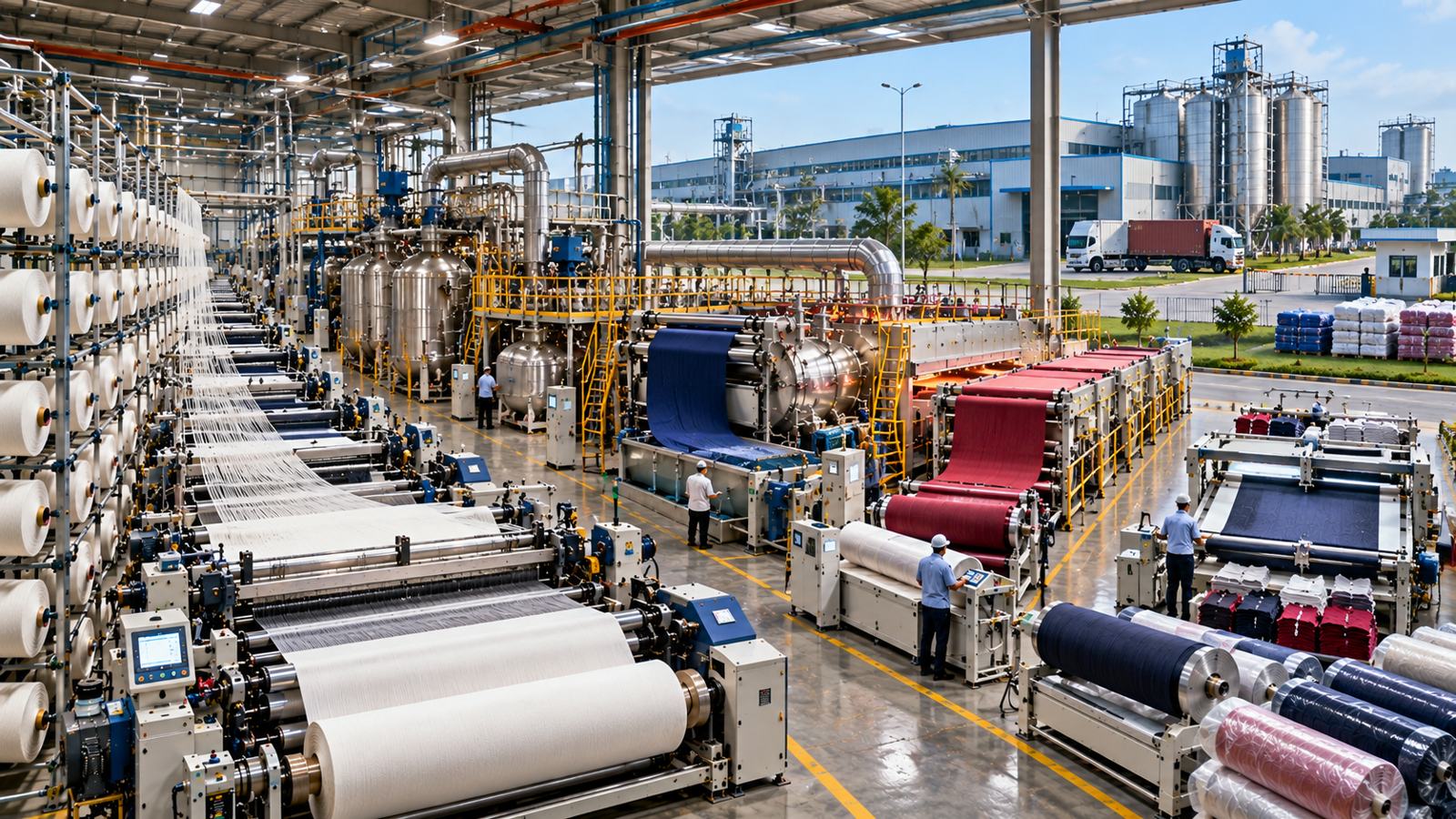
A textile mill is full of fibre, lint and fabric that burn easily, and of thousands of small drives and controllers that run around the clock. A strike to a godown starts a fire, and a surge across the mill stops hundreds of machines at once. LPES protects the buildings and stores, the earthing of dry and wet departments, and the drives and controls as one coordinated system.
Textiles & Garments
Mill roof and humidification plant
- Threat
- Direct strikes to the roof and to humidification plant, exhaust fans and PV arrays on it.
- LPES measure
- The metal roof is used as natural air termination where thickness and continuity allow. Rooftop plant is placed inside the protected volume with air rods on non-penetrating holders.
- Families
Lightning, earthing and surge risks on textile mill sites
Fire in fibre and fabric stores
Cotton bales, yarn and finished fabric burn easily. A direct strike or a flashover inside a godown can destroy the stock and the building.
Hundreds of machines stopping together
Ring frames, looms and knitting machines each have inverters and controllers. A surge on the mill supply trips or damages many at once, and every stop means yarn breaks and fabric faults.
Lint, fly and static
Synthetic fibres build up static during carding, drawing and winding. Lint deposits on panels and cable trays turn a small spark into a fire.
Wet processing and corrosion
Dye houses and washing ranges are wet, hot and chemically aggressive. Earth connections corrode, and operators work among conductive machines on wet floors.
One coordinated lightning protection, earthing and surge protection system
Four pillars. Connected protection. Clear accountability.
Lightning protection, earthing and surge protection only work when they are designed together. LPES is the four parts of that system in one name.

Lightning protection
Mill buildings, godowns, boiler house and stacks are assessed together, with fire risk in fibre and fabric stores taken into the risk assessment. Roofs are used as natural components where suitable, and conductors are kept clear of combustible stock.

Power protection
Protection only works if the power system lets it. LPES studies the fault levels, neutral earthing, earth-fault loop impedance and protection settings, so that every PE conductor is sized for its fault current and every protective device disconnects in time.

Earthing protection
One earthing system serves the whole mill. Dry departments get bonding that drains static from frames and ducts, wet processing gets supplementary bonding in corrosion-resistant materials, and every department grid is interconnected.

Surge protection
Protection follows the power path. Type 1+2 at the mill incomer, Type 2 at department boards and machine supplies, Type 3 and data-line SPDs at controllers and the monitoring network. Status indication shows a spent module during routine rounds.
Products are available in four series, LPES BASIC, LPES SMART, LPES PRO and LPES CENTURY, so the specification can match the duty and the budget of each area of the site.
Earthing and PE conductors: what protects people, and what CEA 2023 requires
An electrode in the ground protects nobody on its own. People and equipment are protected by the conductors that join every frame, panel and pipe back to the main earthing terminal. The CEA Safety Regulations 2023 make these connections mandatory. Select a conductor to see the rule, the sizing and the LPES material. The LPES shields mark where lightning, power, earthing and surge protection apply on the plant, down to the SPD type at each level.
Protective earthing (PE) conductor
Main earthing terminal to the frame of every piece of equipment
On a textile mill. Hundreds of machine motors are fed from busbar tap-offs. A loose PE at one tap-off leaves a row of machines without fault protection.
- Rule
- CEA Reg 43(vii): two separate and distinct connections for apparatus above 250 V. Reg 43(ix): carries the prospective earth-fault current.
- Limit
- Earth-fault loop impedance: measured Zs ≤ ⅔ × U0 / Ia, so the device disconnects in 0.4 s at 230 V and 0.2 s above 230 V on TN final circuits.
- Sizing
- IS 3043:2026, Table 12, same material as the line conductor S: equal to S up to 16 mm², 16 mm² for S from 16 to 35 mm², S/2 above 35 mm². Or by the adiabatic equation S = √(I²t) / k.
- Material
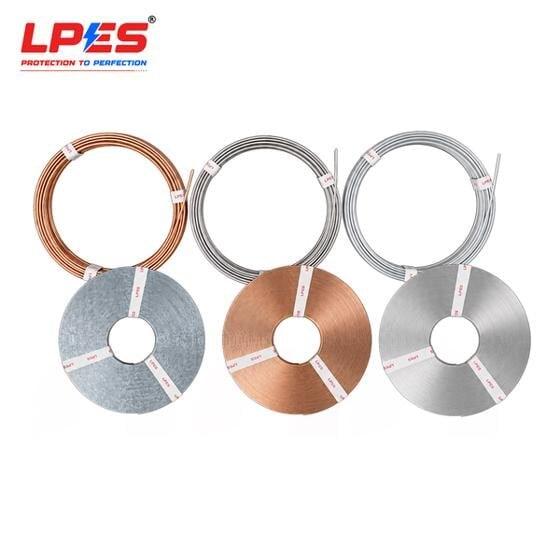
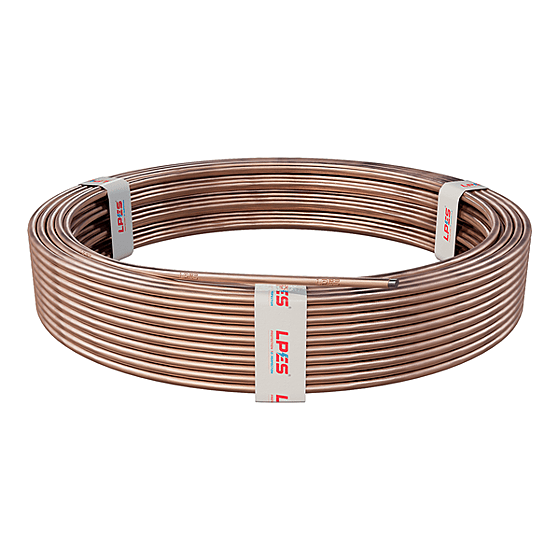
- Insulated green-yellow copper cable, copper tape or copper-bonded conductor, with crimped lugs at both ends. No soldered joints and no switch in the PE.
- Families
On your textile mill site
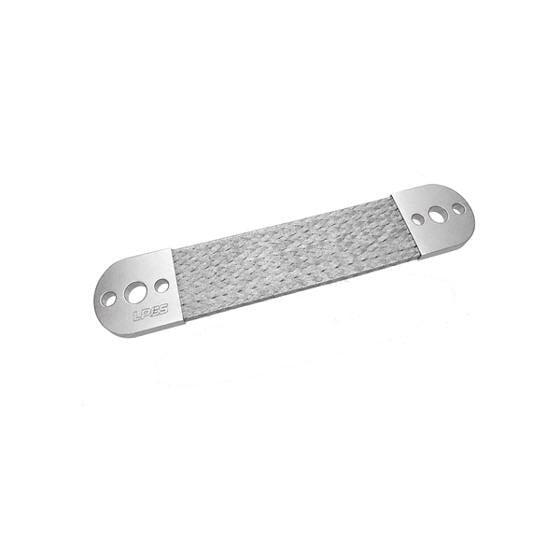
Motors and machines above 250 V get two separate earth connections. Busbar trunking and tap-off PE continuity is tested. In wet processing, insulated copper PE and corrosion-resistant bonding hardware are used, and flexible links bridge vibrating machines.
- Reg 43(vii)Frames of motors and consuming apparatus above 250 V are earthed by two separate and distinct connections.
- Reg 43(v)Every building has protective equipotential bonding.
- Reg 38(3)(vi)Lightning protection as per relevant standards for industrial installations and test laboratories.
- Reg 43(xi)Earth-fault loop impedance is tested and the record is kept.
Two points from IS 3043:2026 that change how earthing is specified. At low voltage there is no minimum earth electrode resistance: protection depends on the earth-fault loop impedance and on the protective device tripping in time. And separate “dedicated” or “clean” earth pits for neutral, body, instruments or electronics are not to be used: every electrode joins one interconnected earthing network.
Clause references are to the Central Electricity Authority (Measures relating to Safety and Electric Supply) Regulations, 2023. Sizing lines follow IS 3043:2026 and IS 732:2019. Confirm against the current official text and state notifications before using them in a tender or inspection.
LPS class, SPD rating and conductor sizes for textile mill projects
The figures engineers look up most, with the clause behind each. Rows marked in red are specific to textile mill sites.
| Item | Value | Source |
|---|---|---|
| Steel frame or rebar as down conductor | Overall continuity 0.2 Ω or less, measured four-wire at about 10 A | IEC 62305-3:2024, D.5.3.5 |
| Drives with high PE current (over 10 mA) | PE of at least 10 mm² copper, or a second PE | IS 3043:2026, 7.6 |
| Panel PE terminal to any exposed part | 0.1 Ω or less, tested at 10 A or more | IS 3043:2026, 7.1 |
| Separate “instrument” earth pits | Not permitted. One interconnected earthing network | IS 3043:2026, 6.3 |
| Rolling sphere radius | 20 / 30 / 45 / 60 m for LPS Class I / II / III / IV | IEC 62305-3:2024, Table 2 |
| Air-termination mesh | 5 / 10 / 15 / 20 m for Class I / II / III / IV | IEC 62305-3:2024, Table 2 |
| Down-conductor spacing | 10 / 10 / 15 / 20 m for Class I / II / III / IV | IEC 62305-3:2024, Table 5 |
| LPS conductor, minimum | 50 mm² in copper, aluminium, galvanised or stainless steel | IEC 62305-3:2024, Table 7 |
| Lightning earth | Ring electrode at least 0.5 m deep, about 1 m from the walls. Aim below 10 Ω | IEC 62305-3:2024, 5.4 |
| Entrance SPD where an LPS exists | Type 1 (Class I). Iimp 25 / 18.75 / 12.5 kA per pole for LPL I / II / III–IV | IEC 62305-4:2024, Table C.3 |
| SPD connecting leads | 0.5 m total or less, line to SPD to earth bar | IEC 62305-4:2024, Annex C |
| Second SPD | Needed when equipment is more than 10 m from the entrance SPD | IEC 62305-4:2024, Annex C |
| Bonding bar to earth | 16 mm² copper, 25 mm² aluminium or 50 mm² steel | IEC 62305-3:2024, Table 9 |
| Disconnection time, TN final circuits | 0.4 s at 230 V, 0.2 s above 230 V | IS 3043:2026, Table 1 |
| Loop impedance, measured | Zs ≤ ⅔ × U0 / Ia | IS 3043:2026 and IS 732 |
| PE and bonding continuity | Within the conductor’s own resistance, tested at about 10 A | IS 3043:2026, Annex E |
The LPS class and the SPD protection level are set by an IEC 62305-2 risk assessment for the site, not chosen from this table. Values are quoted for reference and must be confirmed against the current edition of each standard at design stage.
Every part of the textile mill protection system has its own test standard
IEC 62305 sets the design. The IEC 62561 series sets the test for each component that carries lightning current. A system holds only if the clamp, the conductor and the electrode each pass their own test.
| Component | What the standard proves | Standard |
|---|---|---|
| Clamps, connectors and bonding parts | Each joint is aged in salt mist and a humid sulphurous atmosphere, then tested with lightning current. Class H is tested at 100 kA and class N at 50 kA. | IEC 62561-1 |
| Conductors and earth electrodes | Sets the material, cross-section and coating of tapes, round conductors and rods. A copper-bonded steel rod carries at least 250 µm of 99.9 % copper. | IEC 62561-2 |
| Isolating spark gaps | Joins metal parts that must stay separate in service, such as insulating flanges and cathodically protected pipes. The gap conducts only during a strike. | IEC 62561-3 |
| Conductor holders and fixings | Holders are tested for mechanical strength after environmental ageing, so the conductor stays in place on roofs, walls and structures. | IEC 62561-4 |
| Earth pit housings and electrode seals | Inspection housings are load tested. Seals are tested where an electrode passes through a waterproofed slab. | IEC 62561-5 |
| Lightning strike counters | The counter records each strike carried by a down conductor. A new count is the trigger for an inspection. | IEC 62561-6 |
| Earth enhancing compounds | The compound is tested for leaching, sulphur content, resistivity and corrosion of the electrode buried in it. | IEC 62561-7 |
| Surge protective devices | Part 11 covers SPDs on AC power, part 21 covers signal and data lines, and part 31 covers the DC side of PV plants. | IEC 61643-11, IEC 61643-21, IEC 61643-31 |
| PE, bonding and earthing conductors | Sets the size, material, joints and continuity of every protective conductor from the earth electrode to the equipment frame. | IEC 60364-5-54, IS 3043:2026, IS 732:2019 |
LPES components are built and comply to the parts listed. Ask for the test report of the specific product with your enquiry. Confirm clause values against the current edition of each standard at design stage.
What goes into your textile mill project
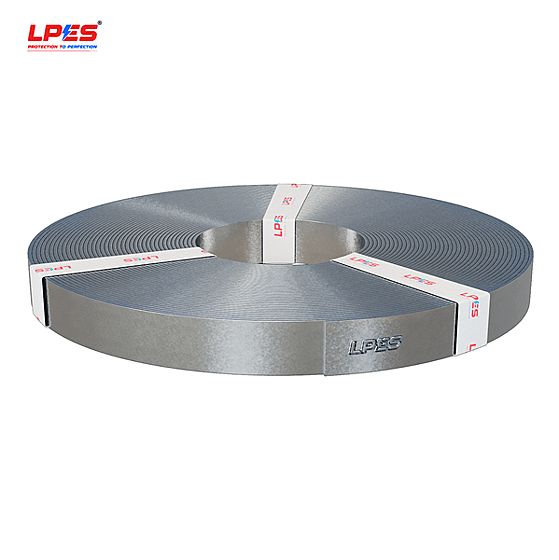
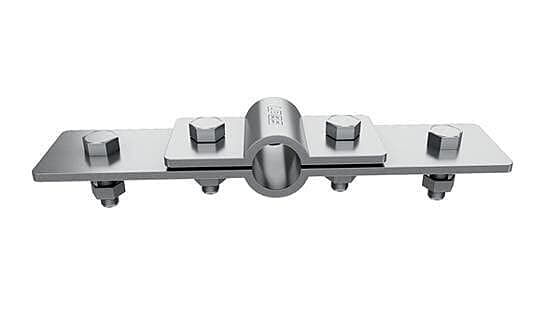
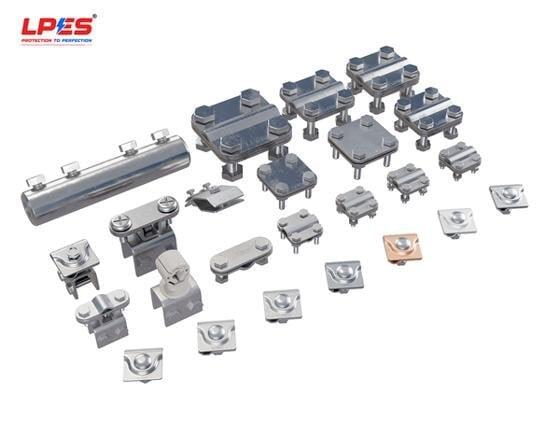
Each card opens the product family in the LPES catalogue.
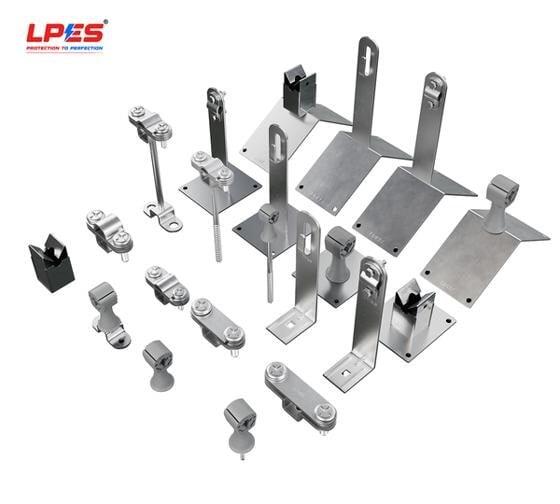
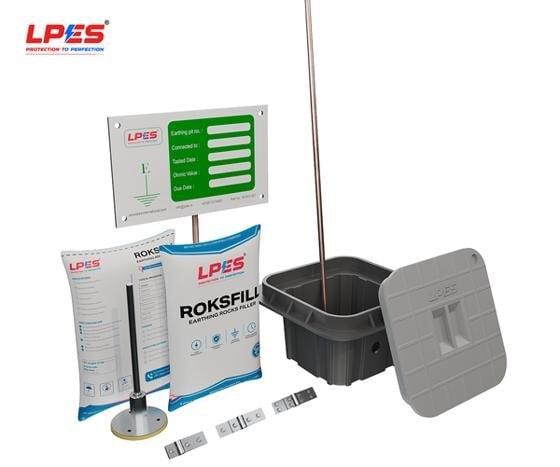
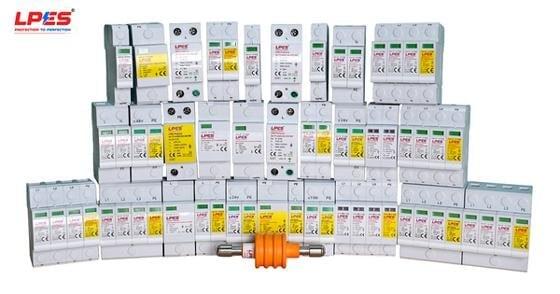
Areas LPES covers in textiles & garments
- Blow room, carding and spinning
- Winding, warping and sizing
- Weaving and knitting sheds
- Dyeing, printing and finishing
- Garment cutting and stitching floors
- Cotton, yarn and fabric godowns
- Boilers, humidification and compressors
- Substation, DG and captive power
Is your textile mill site ready for an inspection?
Six points an Electrical Inspector or an insurer will ask about.
- Every motor and panel above 250 V has two separate earth connections.Reg 43(vii)
- Protective equipotential bonding is installed and was tested before energisation.Reg 43(v), 43(ix)
- Earth-fault loop impedance has been tested for each circuit and each source.Reg 43(xi)
- Earth resistance is tested every year in the dry season and the record is kept.Reg 50(8)
- The lightning protection system has a current risk assessment and inspection record.Reg 38(3)(vi)
- SPDs are fitted at the incomers and their status is checked on rounds.IEC 62305-4
Answer the six points for your site. Nothing is sent anywhere until you ask.
What each person on a textile mill project asks
When did we last prove that every protective conductor is continuous and every breaker will trip on an earth fault?
LPES measures loop impedance and PE continuity circuit by circuit and hands over the record.
Testing & MeasurementLightning to Load
Seven stages, from the first risk assessment to the yearly inspection, with clear ownership at every interface.
Calculated. Coordinated. Implemented. Verified.
- AssessIEC 62305-2 risk assessment, site audit, soil resistivity survey
- DesignLPS, earthing and SPD design with calculations and drawings
- SpecifyBill of materials with LPES part numbers and data sheets
- SupplyProducts from one source, tested to IEC 62561 and IEC 61643
- ImplementInstallation supervision or turnkey execution
- VerifyContinuity, earth resistance and SPD checks, recorded
- AssurePeriodic inspection, monitoring and AMC
LPES Protection Passport. Every project closes with one document set: risk assessment, as-built drawings, product list with part numbers, test records and the inspection plan.
LPES servicesBuilt and comply to
- CEA Safety Regulations 2023
- IEC 62305-1 to -4
- IEC 62561 series
- IEC 61643-11 and -21
- IEC 60364-5-53
- IEC 60364-4-44
- IEC 60204-1
- IS 3043:2026
- IS 732:2019
The applicable edition and any project or statutory specification are confirmed at the design stage.
Textiles & Garments lightning protection and earthing: frequently asked questions
Why are godowns treated differently from the mill building?
Related: Isolated Air-Termination ›
Many machines trip together in a storm. Is that a lightning strike?
Related: Type 2 SPDs ›
How is static handled on synthetic fibre lines?
Related: Equipotential Bonding ›
Why do earth connections fail in the dye house?
Related: Testing & Measurement ›
Engineering guides from the LPES knowledge hub
- Earthing of installations with higher protective conductor currentHB-ID-536
- Supplementary bonding and installations with increased shock riskHB-ID-533
- Types of protective earthing conductors and their electrical continuityHB-ID-530
- Earthing conductor and protective bonding conductor sizingHB-ID-528
- Main earthing terminal / main earth busbar (MET)HB-ID-529
- Fault protection by automatic disconnection in TN, TT and IT systemsHB-ID-532
- Measurement of earth fault loop impedance
- Continuity resistance measurement
Related industries
- Plastics & PolymersIndustry page
- FMCG & BeveragesIndustry page
- Chemicals & FertilisersIndustry page
- Storage EquipmentIndustry page
More in Manufacturing & Process
- Manufacturing & ProcessSector overview
- Automobile IndustryIndustry page
- CementIndustry page
- Chemicals & FertilisersIndustry page
- Electronics & EMSIndustry page
- FMCG & BeveragesIndustry page
- Paints & CoatingsIndustry page
- Plastics & PolymersIndustry page
- Steel & MetalsIndustry page
- All industriesIndustries overview
Your power is connected. Is your protection?
Bring your electrical protection together. Understand your risks. Coordinate your protection. Know who owns each responsibility.
Talk to LPES about a coordinated assessment for your textile mill project, from Lightning to Load. You get: a risk assessment and a protection concept, based on your site layout and single line diagram.