
Introduction
A properly designed earthing system is important for electrical safety in industrial plants, manufacturing facilities, commercial buildings and electrical substations. It helps provide a path for electrical fault currents and supports the performance of lightning protection systems. However, the effectiveness of an earthing system depends on several factors, including the condition of the surrounding soil. Different types of soil behave differently when electrical current passes through them. Some allow current to flow more easily, while others offer greater resistance.
The Wenner Four Pin Method for Soil Resistivity Testing is commonly used to understand these soil conditions before planning an earthing or grounding system. This testing method provides useful information that helps engineers select suitable grounding arrangements and make better decisions during electrical protection planning.
What Is the Wenner Four Pin Method?
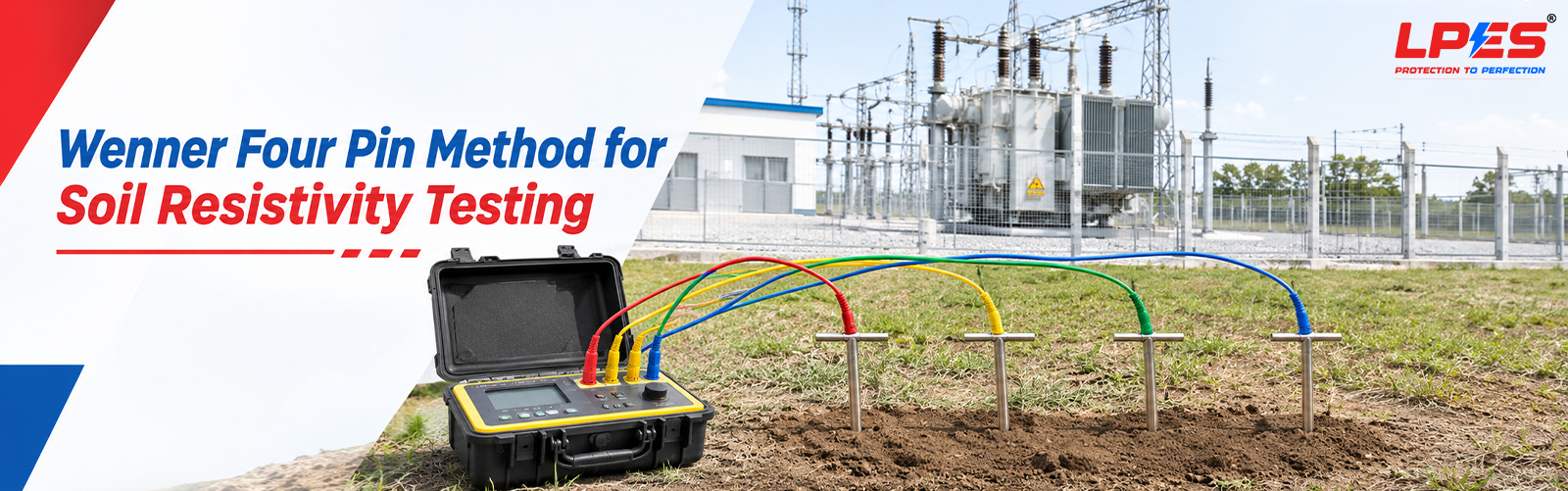
The Wenner Four Pin Method is a widely used technique for measuring soil resistivity. Soil resistivity refers to how much the soil resists the flow of electrical current. The method uses four metal pins placed in a straight line at equal distances. A testing instrument passes a small electrical current through the soil and measures the resulting electrical response. The readings help engineers understand the electrical characteristics of the ground. This information is useful when planning earthing systems for factories, substations, data centres, commercial buildings and infrastructure projects.
Why Is Soil Resistivity Testing Important?
Soil conditions can significantly influence the performance of an earthing system. An earthing arrangement suitable for one location may not perform the same way at another location because soil composition, moisture and underground conditions can differ. For example, a manufacturing plant built on rocky ground may require a different earthing arrangement from a facility constructed on moist soil. Without understanding these conditions, it becomes difficult to plan a suitable grounding system.
Soil resistivity testing helps engineers assess site conditions before deciding on the type, location and arrangement of earthing components. It can also reduce the likelihood of unexpected design changes during installation.
How Does the Wenner Four Pin Method Work?
The Wenner method follows a straightforward testing approach.
First, a suitable location is selected within the project site. Four metal pins are then inserted into the ground in a straight line, maintaining equal spacing between them.
The pins are connected to a soil resistivity testing instrument.
The instrument sends a controlled electrical current through the soil and records the measurement.
Testing is repeated at different pin spacings and, where necessary, at different locations across the site.
These readings help engineers understand how soil conditions vary within the proposed installation area.
The results are then reviewed and used during the planning of the earthing and grounding system.
Although the basic process is simple to understand, field testing should be performed by trained personnel using appropriate equipment and safety procedures.
Factors That Affect Soil Resistivity
Soil resistivity is not the same at every location. Several environmental and ground conditions can influence testing results.
Soil Type
Different soil types have different electrical properties. Clay, sand, gravel and rocky ground can produce different resistivity readings depending on their composition and moisture content. Understanding the soil type helps engineers select a suitable grounding arrangement.
Moisture Content
Water content can affect how easily electrical current passes through the soil. Soil with sufficient moisture generally offers less resistance than dry soil, although the actual result also depends on soil composition and dissolved minerals.
Seasonal Changes
Soil conditions can change throughout the year. During dry seasons, reduced moisture may increase soil resistivity. Rainfall can produce different readings, especially near the ground surface. These variations should be considered when planning earthing systems intended to operate throughout the year.
Underground Conditions
The ground beneath an industrial facility may contain different soil layers. Conditions near the surface may differ from those deeper underground. Testing at different pin spacings helps engineers assess these variations and better understand the site.
Importance of Soil Testing for Industrial Facilities
Industrial facilities depend on electrical equipment, machinery and control systems for daily operations. Transformers, electrical distribution panels, motor control centres, automation equipment and communication networks require properly designed electrical protection arrangements. An unsuitable earthing system can increase electrical safety risks and affect the performance of connected protection systems. Soil resistivity testing provides useful information before the installation of grounding components.
For large manufacturing plants and substations, measurements across multiple locations can help engineers identify variations within the site. This information supports more appropriate earthing system planning and helps address facility specific requirements.
Role of Soil Resistivity Testing in Lightning Protection
Lightning protection systems are designed to manage the risks associated with direct and nearby lightning strikes. A complete lightning protection strategy generally includes external lightning protection, earthing, equipotential bonding and surge protection devices. The earthing system forms an important part of this arrangement by providing a connection to the ground.
However, its design should consider the electrical characteristics of the surrounding soil. Wenner Four Pin testing helps engineers understand these conditions before developing a suitable earth termination arrangement.
For industrial buildings, warehouses, substations and other infrastructure, this information can support coordinated lightning protection and grounding design. Soil testing alone does not determine the effectiveness of a lightning protection system. It should be considered alongside lightning risk assessment, electrical infrastructure and applicable engineering requirements.
Common Mistakes to Avoid During Soil Resistivity Testing
Reliable testing depends on proper site selection, equipment use and documentation. One common mistake is taking measurements at only one location when the project site covers a large area. Soil conditions can vary across the property, making additional measurements useful.
Another mistake is ignoring underground metallic structures, existing cables or pipelines that may affect readings. Seasonal conditions should also be considered, particularly where soil moisture changes significantly throughout the year. Finally, test results should be reviewed before being used for design decisions rather than selecting an earthing arrangement based on a single reading.
How Soil Resistivity Testing Supports Earthing System Planning
Soil resistivity testing is generally performed during the early stages of electrical infrastructure planning.
The information collected helps engineers evaluate suitable earthing arrangements for the project.
Depending on site conditions, the design may include buried conductors, earth electrodes or a connected grounding network.
The final arrangement also depends on the facility layout, electrical system, safety requirements and applicable standards.
For industrial projects, proper planning can reduce installation challenges and support the long term reliability of electrical infrastructure.
Testing also provides useful documentation for design reviews and future system assessments.
About LPES International
LPES International provides engineering focused lightning protection, surge protection, earthing and grounding solutions for industrial, commercial and infrastructure facilities. The company supports protection planning through lightning risk assessment, technical consultation and coordinated system design. Understanding site conditions, including soil resistivity, is an important consideration when developing appropriate earthing and grounding arrangements. LPES focuses on connecting the different elements of electrical protection rather than treating individual systems as isolated installations.
Why Choose LPES International?
1. Engineering Focused Approach
LPES considers site conditions, electrical infrastructure and protection requirements during system planning.
2. Customized Protection Design
Earthing, grounding and lightning protection arrangements are planned according to the requirements of individual facilities.
3. Risk Based Planning
Lightning exposure, electrical safety considerations and equipment requirements help guide protection decisions.
4. Quality Focused Material Selection
Suitable materials and components are considered based on the application, environmental conditions and project specifications.
5. Technical Consultation and Support
LPES provides engineering guidance for protection planning, system design and project execution requirements.
Conclusion
The Wenner Four Pin Method for Soil Resistivity Testing is an important starting point for understanding soil conditions before designing an earthing system. It helps engineers evaluate site conditions and make informed decisions about suitable grounding arrangements.
For industrial plants, substations and infrastructure projects, soil testing should be considered alongside lightning risk assessment, earthing design, equipotential bonding and surge protection solutions. A properly planned electrical protection strategy supports personnel safety, equipment protection and operational continuity.
Contact LPES International for technical consultation on earthing and grounding systems, lightning protection design, surge protection solutions and engineered electrical safety.